Advantages of
Quantum Dot Micro Lens Array
QD MLA component will help you
solve the difficulties in the bonding
process, the technical challenge for
colorization and the inefficiency
caused by complex modularization.
01
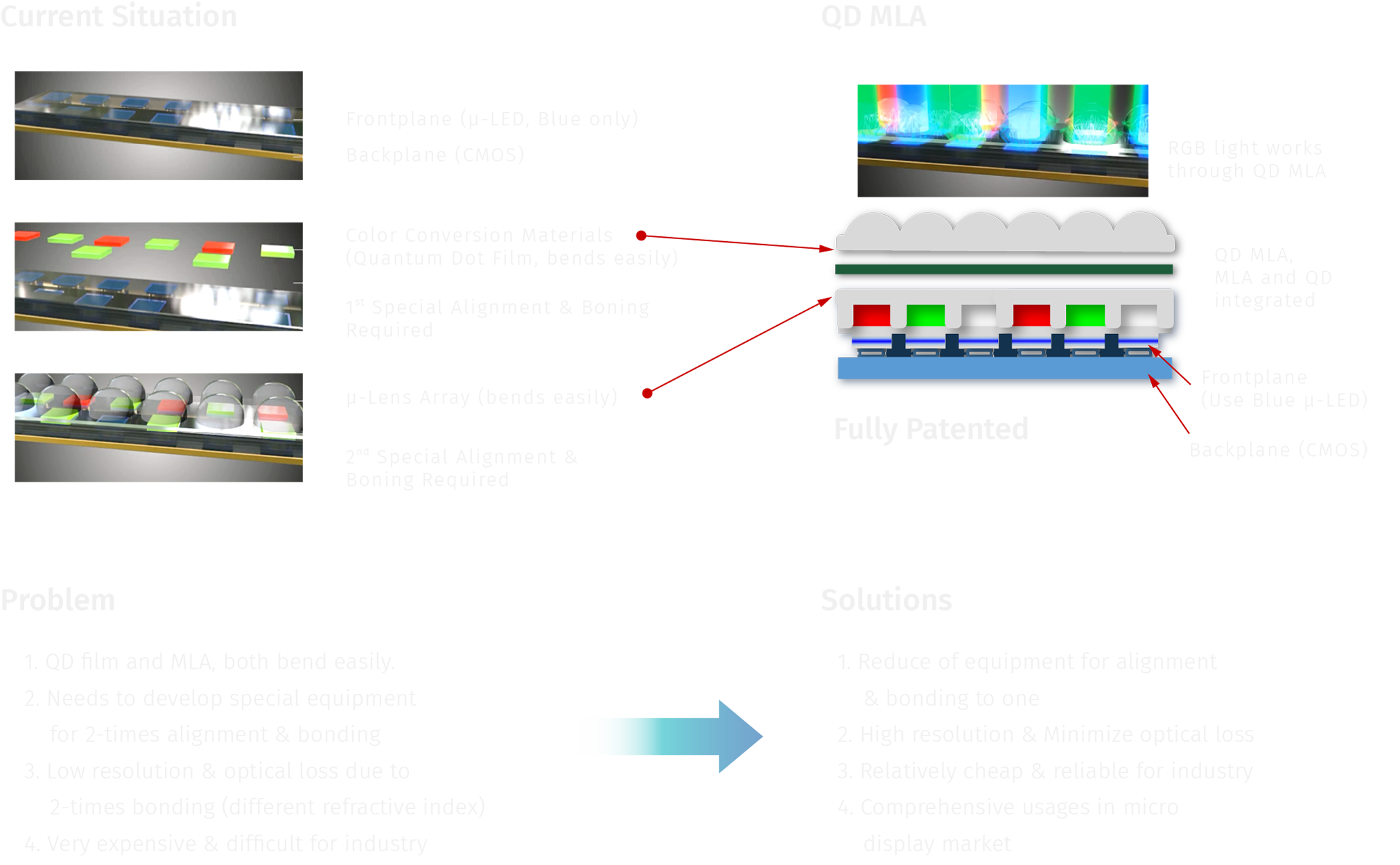
Conventional display structures require separate fabrication and repeated bonding of MLA and QD layers, resulting in complex handling, higher cost, and increased optical loss.
QD MLA simplifies this process through an integrated structure that minimizes alignment and bonding steps. The result is higher resolution, lower optical loss, and improved manufacturability a key advantage for next-generation high-performance displays.
02
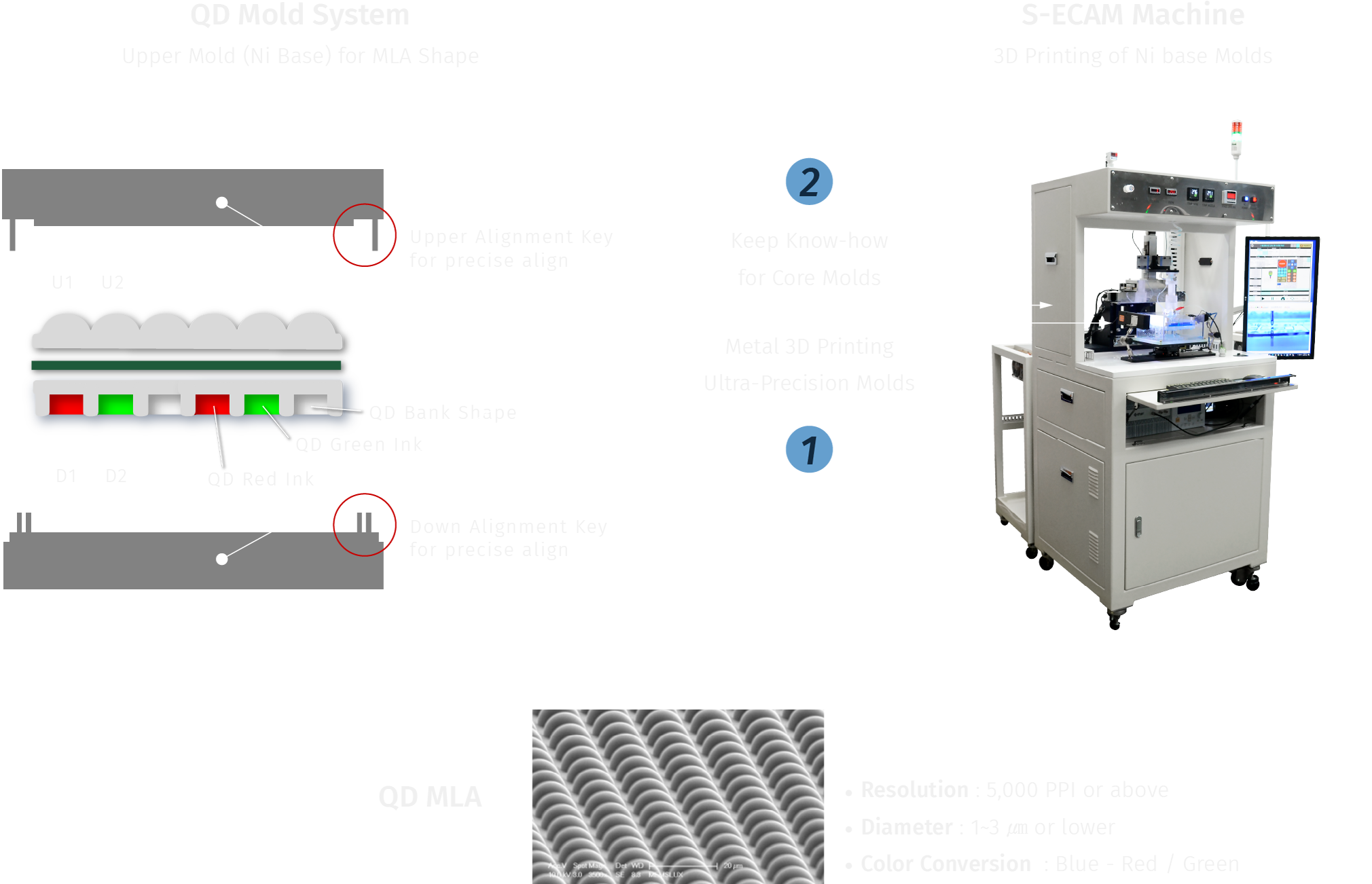
S-ECAM enables the high-precision fabrication of Ni-alloy molds for QD MLA production. The upper mold defines the micro lens array, while the lower mold creates the cavity structures for Quantum Dot filling.
With its ultra-precision 3D printing capability, S-ECAM allows faster mold optimization, improved design flexibility, and direct feedback-based process refinement. This provides a strong manufacturing advantage for the scalable production of next-generation optical components.